Agritopia: The Farm That Became a Neighborhood, On Purpose
In Agritopia, the front yard is a working farm and the neighborhood restaurant sits in a converted quonset hut. The story of Gilbert's most famous experiment — and the family that refused to simply sell the farm.
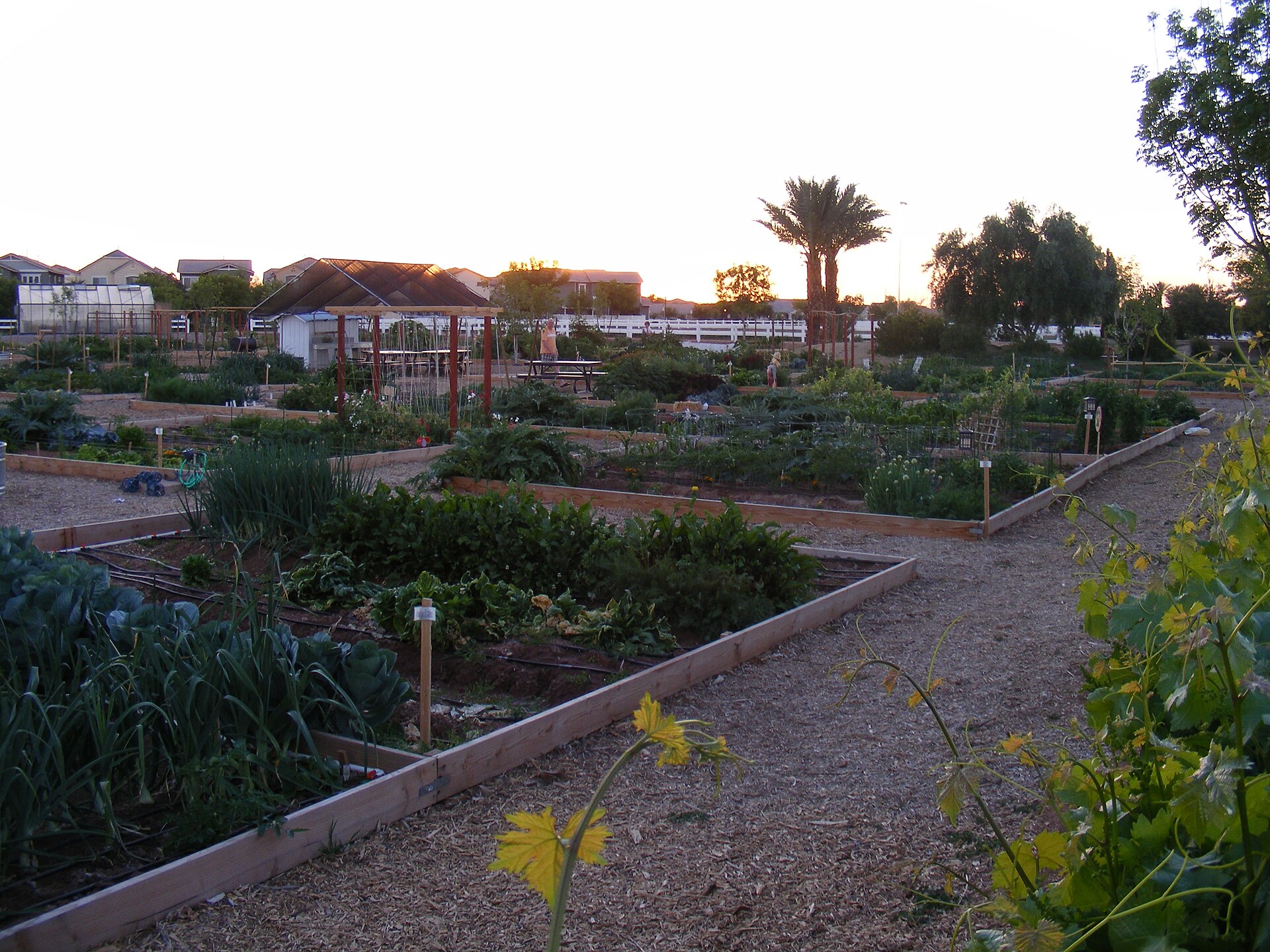
Most subdivisions erase the farm they replace. Agritopia — the neighborhood built on the Johnston family farm at Higley and Ray roads — is Gilbert's famous refusal to do that. When development came for the Johnston farm, the family that had worked the land since the 1960s chose a third option: build the neighborhood around the farm, keep farming it, and let the suburb grow up inside an agricultural landscape instead of on top of one.
The design is now a landmark of American new urbanism: some 450 homes in traditional styles on tree-lined streets, arranged around an 11-acre working farm whose fields produce for a community-supported agriculture program, a farm store, and the neighborhood's restaurants. Joe's Farm Grill serves in the family's converted home and garage; the Barnone building — a craftsman barn raised in a former quonset hut — houses artisans, a brewery and small makers; and The Coffee Shop occupies the farm's old mechanic's garage. The farm's peach trees and citrus groves are not decoration: they are the neighborhood's economy and its calendar.
Agritopia's influence runs well past its fences. It demonstrated — in a metro famous for stucco repetition — that agricultural identity could be a community's organizing asset rather than its pre-development condition, and it made Gilbert nationally famous in planning circles. Its lessons and its limits are both instructive: the model depends on a working farm's economics, a founder's patience, and buyers willing to pay for a place with a story. The imitators across the country testify to how rare the combination is.
November is the farm's gentle season: fall crops coming in, the restaurant patios full, the neighborhood's holiday lights being planned around the old trees. The Johnston family's next chapters — including development phases on the farm's remaining land — are Gilbert news of the first order, because Agritopia is not merely a neighborhood here. It is the town's thesis statement about itself.
This desk will cover Agritopia as it covers everything in Gilbert: the farm's seasons, the businesses' turns, the development cases as they come. A neighborhood built to prove a point deserves reporting that checks whether the point still holds. So far, every November, it does.