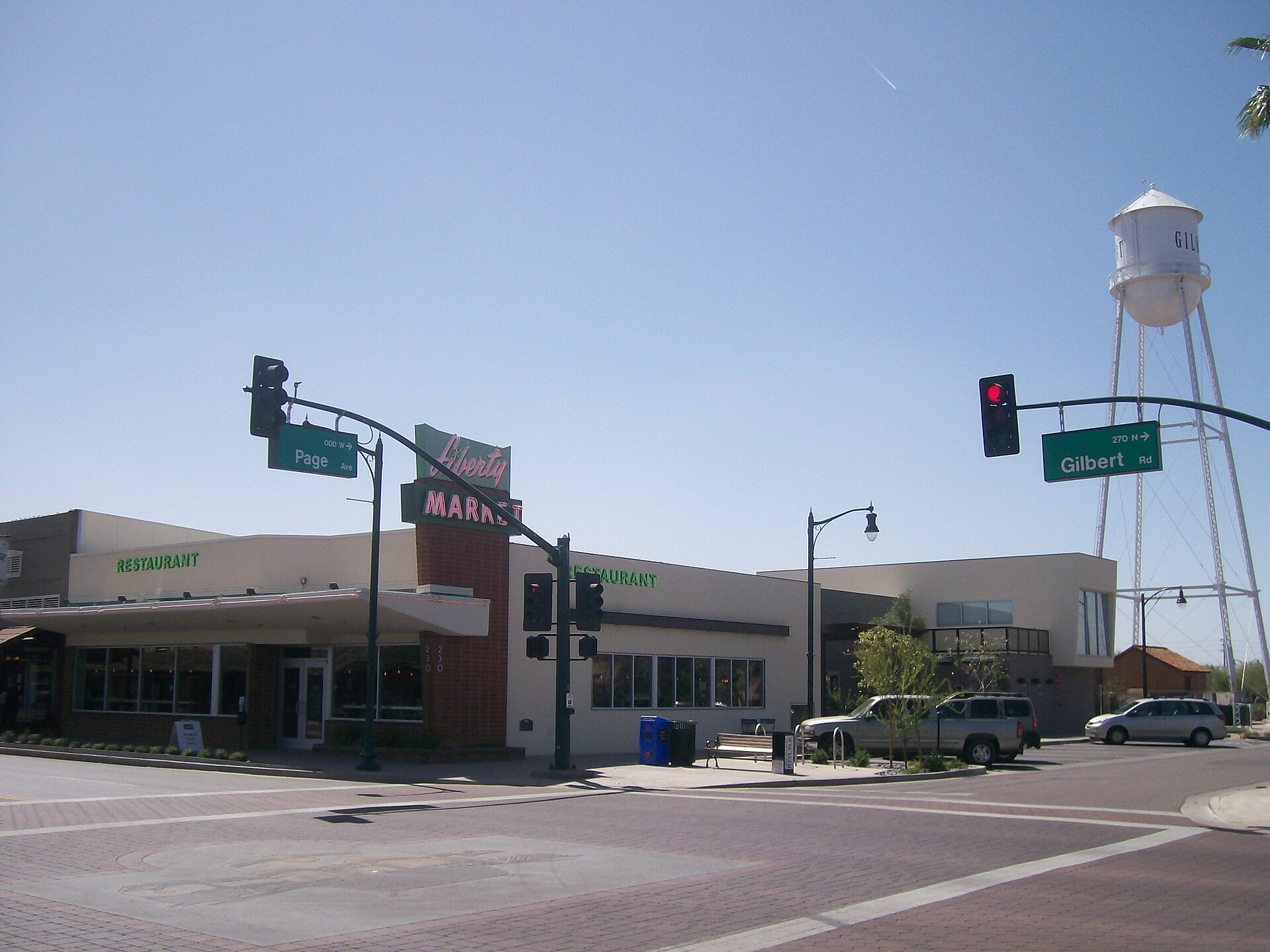
Hay Capital of the World: How Gilbert Remembers Itself
The town shipped so much alfalfa down the railroad that it took a title for it. The Gilbert Historical Museum keeps that world — and teaches the subdivisions what the water tower means.
The title was earned in freight: in the First World War era, Gilbert's farmers shipped so much alfalfa hay — much of it to feed the U.S. Cavalry's remount operations — that the town promoted itself, with a straight face and decent evidence, as the Hay Shipping Capital of the World. The railroad siding that William 'Bobby' Gilbert offered the Arizona and Eastern Railroad in 1902 had made a town; the town's hay made it, briefly, famous.
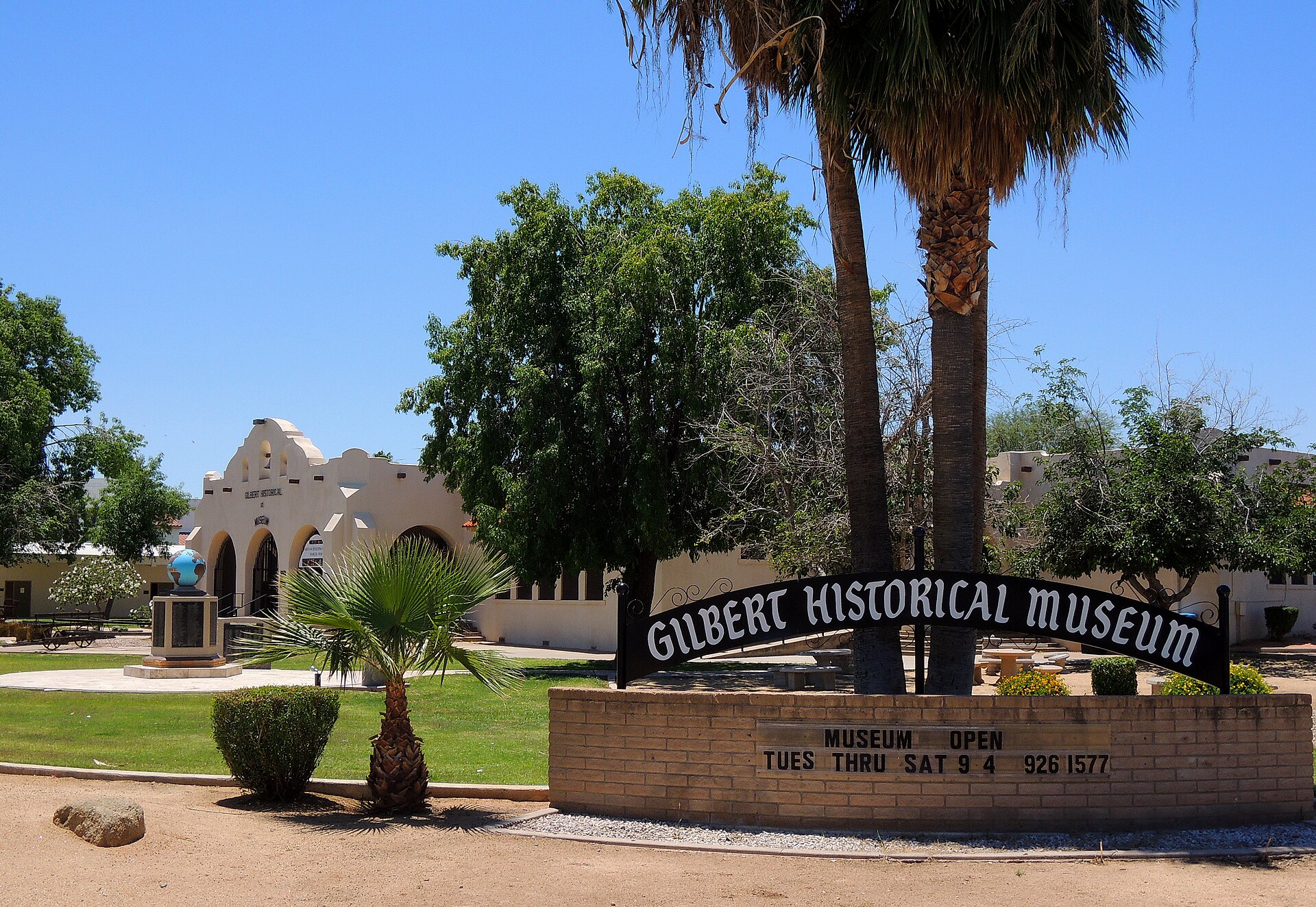
The Gilbert Historical Museum — housed in the original Gilbert Elementary School, built in 1913 on Gilbert Road and now known as HD South, the Heritage District's history campus — is where that world is kept. Its rooms hold the farm town whole: the schoolroom, the farm implements, the photographs of fields where subdivisions now stand, the ledgers and letters of a community of a few hundred people who knew the town's entire cast by name.
Gilbert's timeline rewards the telling. Incorporated in 1920, the town stayed small for six decades — a farming community of a few thousand — before the Valley's growth arrived in the 1980s and 1990s and multiplied its population beyond the founders' arithmetic: past 100,000 by the 2000 census, past a quarter-million by the 2020s. The elected choice to remain a 'town' rather than a city — Arizona law lets large municipalities keep the title — is itself a piece of the memory work: a quarter-million people insisting, on the letterhead, on the smaller word.
The museum's programs do the essential stitching: school tours that put subdivision children in the 1913 classroom, archives that answer the genealogy and property questions of a town where almost everyone's roots here are shallow, and exhibits that keep the agricultural economy — the canals, dairies, cotton and hay — legible as the foundation under the master plans.
Our history desk will work with the museum's record often, because Gilbert's central drama — how a farm town becomes a great suburb without forgetting the farm — is written in its archives. The hay capital's title is a century old. The town it describes is still, stubbornly, in evidence.